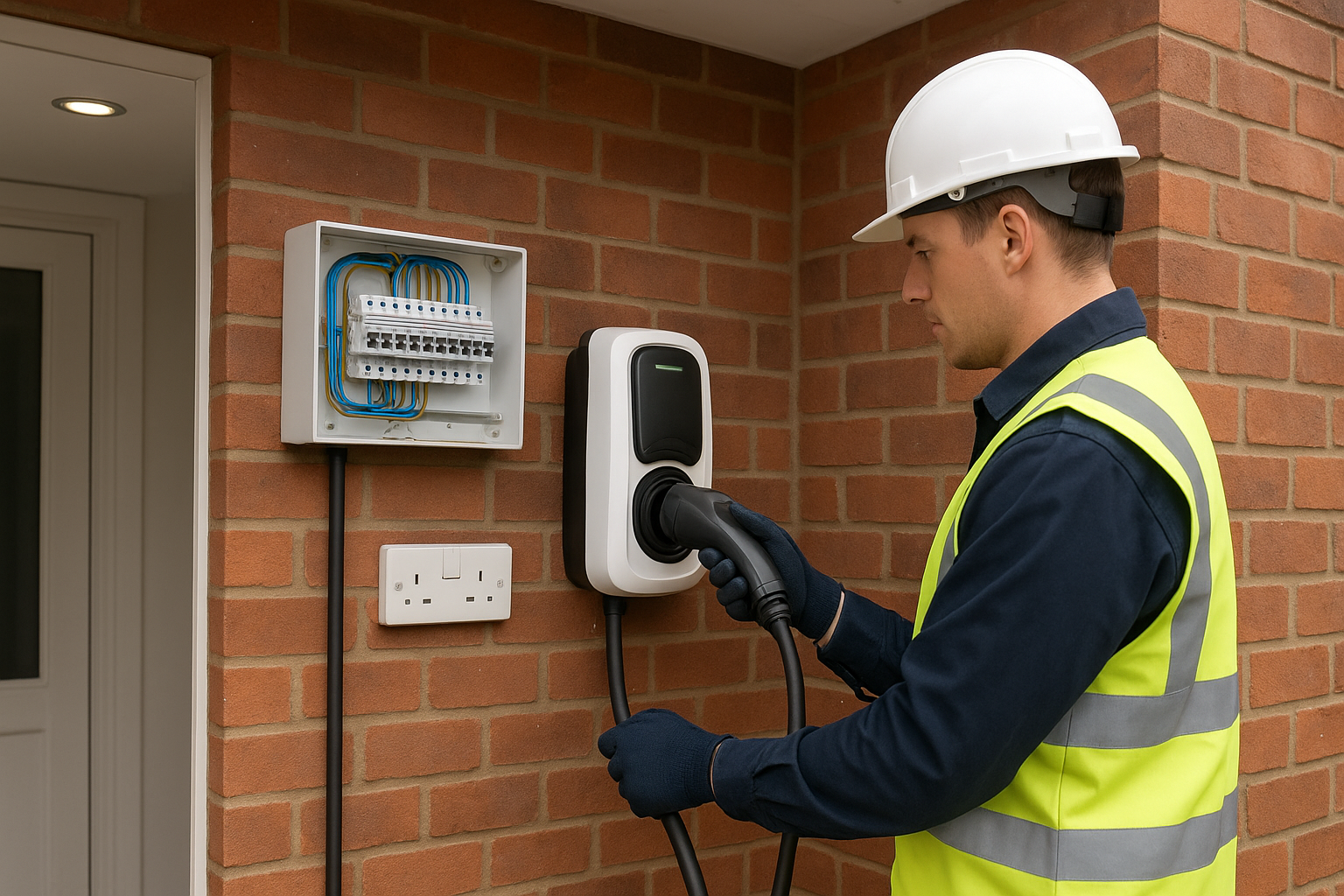
If you need EV charger installation Finchley Central, ElectriCity Services can help with a practical, maintenance-led approach that focuses on safe installation, sensible charger positioning, and the checks needed to reduce repeat callouts later. Whether you are charging a new electric vehicle at home, fitting charge points for a landlord property, or planning workplace charging for staff and visitors, the key is to match the equipment to the supply, the cable route and the way the property is actually used.
We work across Finchley Central from Ballards Lane and Finchley Central Station through to Regents Park Road, Victoria Park and Church End, with nearby support in North Finchley, East Finchley, Mill Hill and Hendon. That local mix matters because the electrical setup in a Victorian terrace, converted flat, older rewired home, modern apartment block, shop or office can be very different. A charger that works well in one property may need a different mounting point, cable route or load check in another.
If your current charger is not working properly, if you have questions about supply capacity, or if you are trying to avoid nuisance tripping and repeat fault visits, the right inspection and testing at the start can save time and disruption later. Call 020 3633 1608 or email info@finchleycentralelectricians.co.uk to request a visit.
Many customers contact us when they have a new electric vehicle and need a home charging solution before daily charging becomes inconvenient. Others are dealing with a charger that intermittently fails, a garage feed that looks undersized, or a parking layout that makes cable routing awkward. In each case, we look at the existing electrical equipment, the consumer unit, the available capacity, and the practical route from supply to charge point before recommending the next step.
Periodic inspection and testing are especially important for EV charging because these units are used regularly and often draw a sustained load. Over time, loose terminations, weather exposure, damaged containment, water ingress, or a change in household demand can all create problems. A charger that once seemed fine can begin to trip, run inconsistently or show signs of wear if the installation has not been checked properly.
For landlords, property managers and business owners, maintenance planning is just as important as installation. A charger in a car park, shared driveway or workplace bay needs to be positioned for safe use, checked for physical damage, and reviewed if the building supply changes. That is how you reduce repeat callouts and keep the charging point available when people need it.
Our service includes home EV charge point installation, driveway and garage charger positioning, load assessment and supply checks, workplace and commercial charge points, and charge point fault finding. We also support related electrical work such as consumer unit work, electrical repairs, socket installation, lighting installation and electrical fault finding where these affect the charging setup.
Home EV Charge Point Installation in Finchley Central
Home EV charge point installation in Finchley Central usually starts with the property itself. A semi-detached house near Ballards Lane, a Victorian terrace close to Church End, or a converted flat off Finchley Central Station may all need a different approach to cable routing, mounting height and supply assessment. The aim is to install a charger that is easy to use, safe to operate and suited to the electrical capacity available.
We look at where the vehicle is parked, how the cable will reach the car, and whether the charger can be installed without creating a trip hazard or unnecessary visual clutter. In older homes, especially those with older rewires or limited spare ways at the consumer unit, the existing installation may need additional checks before charger fitting can go ahead. In modern flats, access arrangements, communal supplies and parking layout can also affect the design.
Homeowners often raise the same practical questions: where should the charger go, how long will the cable need to be, and will the supply cope with regular charging alongside cooking, heating and other household loads? Those are sensible questions. They should be answered before installation, not after. If anything about the existing wiring, protective devices or earthing arrangement is unclear, it is better to inspect it properly first.
Periodic inspection and testing are useful after installation too. If a charger starts to trip, if the vehicle only charges intermittently, or if the unit has been exposed to weather or physical impact, a check of the equipment and associated circuits can identify whether the issue is with the charger, the cable, the supply or a separate fault elsewhere in the property.
Where work is notifiable under Part P of the Building Regulations, it should be carried out and certified appropriately. Customers should always ask for current scheme registration and insurance details before electrical work is booked if they want that reassurance, as we do not make assumptions about credentials that have not been supplied.
Driveway and Garage Charger Positioning in Finchley Central
Driveway and garage charger positioning in Finchley Central is often one of the most important parts of the job because the best charger is not always the one that is easiest to fit. It needs to suit the parking position, the available wall space, the route for the charging cable and the likelihood of future use. A charger mounted too far from the vehicle can create stretching, awkward cable runs or repeated wear on the lead. A charger placed in the wrong position can also make everyday charging frustrating.
In homes around Victoria Park, Regents Park Road and the surrounding streets, we often see a range of parking arrangements: front drives, side access, detached garages and shared spaces. In some cases, the best position is on a garage wall; in others, a front wall or a post-mounted arrangement may be more practical. The decision should be based on safe access, cable protection and a sensible route back to the supply.
For garage installations, we also consider moisture, ventilation and the condition of the existing wiring. A garage charger should not be fitted in a way that leaves it vulnerable to damp, impact damage or poor cable management. If the garage has limited power or the circuit condition is uncertain, additional checks may be needed before finalising the layout.
For driveway charging, cable routing matters just as much. The route should avoid areas where vehicles regularly pass over it, and it should not create a hazard for pedestrians, visitors or children. In some properties, a small change in position can make the installation much more reliable and reduce the chance of damage that leads to repeat callouts later.
If you are planning a new installation, it is worth thinking ahead about vehicle changes too. A charger position that works for one car may need adjustment if you later change to a larger model, a different charging port location or a second vehicle. Good planning at the outset helps avoid avoidable alterations later.
Load Assessment and Supply Checks in Finchley Central
Load assessment and supply checks in Finchley Central are essential before many EV charger installations, especially where the property already has a busy electrical demand. An EV charger can place a significant and sustained load on the system, so the supply, earthing, consumer unit and protective devices all need to be considered together rather than in isolation.
This is particularly important in older houses, converted flats and properties that have had piecemeal upgrades over time. A consumer unit may look modern enough at first glance, but the overall circuit arrangement, spare capacity and condition of the installation can still affect whether a charger is suitable. We also see cases where nuisance tripping is caused by a combination of appliance use, ageing equipment and a charger that has not been matched properly to the installation.
Our checks focus on the practical questions that matter: is there enough capacity for charging, is the circuit arrangement suitable, are there signs of overheating or previous faults, and is the supply likely to remain stable under normal use? If the answer is no, the solution may involve consumer unit work, circuit changes or a different charger setup rather than simply fitting the first unit that was requested.
Customers in Finchley Central sometimes ask whether a charger fault means the charger itself is broken. Not always. A charge point can appear faulty when the real problem is at the supply side, in the circuit protection, in the cable route or in a loose termination elsewhere on the installation. That is why fault finding should start with inspection and testing rather than assumptions.
Regular periodic inspection and testing can also help reduce repeat callouts by identifying early signs of wear before they become a full failure. That may include checking for damage, verifying that protective devices operate correctly, reviewing the condition of the charger enclosure and making sure the installation still suits the current electrical load in the property.
If your property has had recent changes such as a new electric vehicle, a kitchen upgrade, an extension, a heat pump, or additional appliances, it is sensible to review the load again. Electrical demand changes over time, and charger performance can be affected by those changes even when the charger itself has not been touched.
Workplace and Commercial Charge Points in Finchley Central
Workplace and commercial charge points in Finchley Central need the same attention to supply and positioning, but with extra focus on usage patterns, access and ongoing maintenance. Shops and offices near Ballards Lane, as well as business premises serving North Finchley, East Finchley and Hendon, may need charging that is reliable for staff, visitors or fleet use.
For commercial sites, the electrical design should reflect how many vehicles may charge at once, how long they are likely to stay plugged in, and whether the installation needs to support shared use. A charger in a staff car park is not just a piece of equipment; it is part of the building’s electrical infrastructure and should be planned accordingly.
We look at practical issues such as cable protection, mounting position, access control and the likely electrical load on the premises. In some cases, the installation may need a staged approach so the site can expand later without major disruption. In others, the most important step is simply making sure the existing supply can support the intended use safely.
Regular inspection is particularly useful in commercial settings because shared equipment tends to see more wear. Chargers can be knocked, cables can be left in awkward positions, and fault reports may come from different users with different descriptions of the same issue. A maintenance-led approach helps identify whether the problem is a charge point fault, a supply issue, or damage caused by use over time.
For landlords and property managers, keeping records of inspections and repairs can also make future servicing easier. If a charger is repeatedly called out, the pattern often points to a positioning issue, a supply limitation or an installation detail that should be corrected rather than repeatedly reset.
Charge Point Fault Finding in Finchley Central
Charge point fault finding in Finchley Central is often requested when a charger stops working, trips the supply, shows irregular behaviour or only charges under certain conditions. The first step is to establish whether the fault lies with the charge point itself, the vehicle, the supply, the protective devices or the wiring between them.
We commonly investigate issues such as chargers not starting, intermittent charging, repeated tripping, damaged cables, loose connections, weather-related faults and problems that appear only at certain times of day. In some cases, the fault is linked to earlier installation issues that were not obvious at the time, such as poor cable routing, an overloaded circuit or a supply that has become less suitable as household demand has increased.
Recent local work has included a kitchen wiring inspection in East Finchley after nuisance tripping, a new light fitting support job in Church End, and a lighting fault repair in Mill Hill. That kind of work shows the value of checking the wider installation rather than focusing only on the visible symptom. An EV charger fault can be part of a broader issue in the property, especially where the consumer unit, switches, fittings or other circuits are already under strain.
If a charger has stopped working, do not keep resetting it repeatedly without understanding the cause. Switch off if there is visible damage, burning smell, heat, sparking or repeated tripping, keep clear of damaged wiring, and arrange a qualified electrician to inspect the installation. Some faults can be resolved with a repair; others may require a circuit review, a new protective device, or an upgrade to the supply arrangement.
Fault finding is also where maintenance pays off. A charger that is inspected periodically is less likely to fail without warning, and early signs of wear can often be dealt with before they become a bigger problem. That reduces repeat callouts and helps keep the charge point in normal use.
ElectriCity Services is based at 10A Ballards Ln, London N3 2HA and supports customers across Finchley Central and nearby areas including North Finchley, East Finchley, Church End, Mill Hill and Hendon. If you need help with home EV charge point installation, driveway and garage charger positioning, load assessment and supply checks, workplace and commercial charge points, or charge point fault finding, call 020 3633 1608 today.
We also support related electrical services including electrician callouts, emergency electrician support, electrical repairs, consumer unit work, lighting installation, socket installation, electrical fault finding and domestic electrician services. If you are planning EV charging in a Victorian terrace, converted flat, older rewired home, modern flat, shop or office, a careful inspection-first approach is the best way to reduce repeat problems and keep the installation working as intended.
Call 020 3633 1608 or email info@finchleycentralelectricians.co.uk to request a visit from ElectriCity Services.